 Sudden Valley Roofing
 Decks Built for Sunnyland's Conditions, Not a Catalog Photo
A deck in the Sunnyland area doesn't fail because the design was wrong. It fails because the details underneath — the flashing, the fastener choice, the spacing, the drainage path — weren't built for what this part of Whatcom County actually throws at a structure year-round. Driving rain that comes in sideways off the water, salt-laden air that speeds up corrosion on anything metal, and a moss season that can stretch from fall through spring all put steady pressure on outdoor wood and hardware. A deck built here needs to be built for here, not for a dry-climate spec sheet.
This page is specifically about custom deck construction and repair for homes in and around Sunnyland. We're not going to give you a generic national deck-building overview — we're going to walk through what actually matters for a deck that has to survive a long, wet Pacific Northwest season after season.
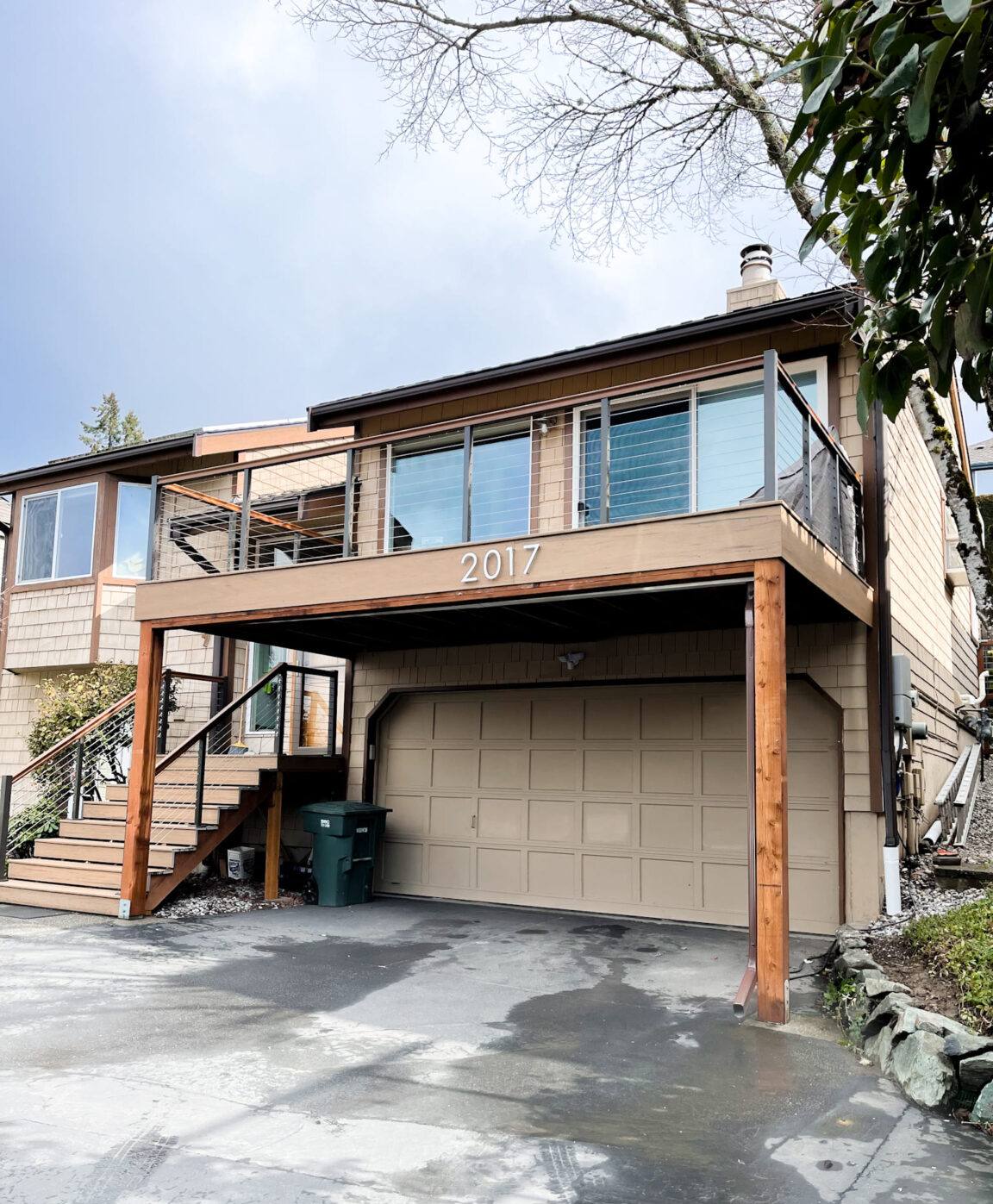
What Local Homes Actually Need From a Deck
Most deck problems we get called out for in this area trace back to a handful of recurring issues, not exotic ones. They're predictable if you know the climate, and preventable if the deck was built correctly the first time.
Moisture That Doesn't Let Up
Whatcom County gets a lot of rain, and a lot of it comes in wind-driven rather than falling straight down. That means water gets pushed sideways under railings, into ledger connections, and along the tops of joists in ways that a deck built for a calmer climate isn't necessarily prepared for. Any point where two pieces of decking material meet, or where the deck attaches to the house, is a place water will find over time if it isn't detailed correctly.
Moss, Algae, and Shade
A lot of Sunnyland-area lots have mature trees and shaded exposures, which is great for privacy and terrible for a deck surface. Moss and algae need moisture and shade to take hold, and once they do, they hold water against the decking and turn the surface slippery and slick. A deck that doesn't get airflow underneath, or that traps standing water on the surface, will grow moss faster than one designed with drainage and gaps in mind.
Salt Air and Hardware Corrosion
Proximity to Bellingham Bay and the broader Puget Sound airshed means homes in this area deal with a degree of salt exposure in the air, even away from the immediate waterfront. Salt air accelerates corrosion on fasteners, brackets, and any exposed metal hardware. Standard interior-grade or even basic exterior screws can start rusting and staining the decking around them well before the wood itself is due for replacement.
Decking Material Options for This Climate
There's no single "best" decking material for every home — it depends on budget, maintenance tolerance, and how much shade and moisture the specific deck location deals with. Here's how the common options actually perform under Whatcom County conditions.
| Material | Moisture & Moss Resistance | Maintenance Needed | Typical Lifespan Here |
|---|---|---|---|
| Pressure-treated wood | Fair — needs sealing to perform well | Annual cleaning, periodic sealing/staining | 15–20 years with upkeep |
| Cedar | Good natural rot resistance, still needs finish | Regular cleaning and refinishing | 20+ years with consistent care |
| Composite decking | Very good — doesn't absorb water like wood | Periodic washing to prevent surface moss/algae | 25–30+ years, varies by product line |
| PVC/capped polymer | Excellent — fully moisture resistant surface | Occasional washing | Long-term, minimal structural decay risk |
Composite and capped polymer products generally hold up better against moss staining and moisture absorption than raw wood, but they cost more upfront and still need a properly built substructure underneath — the decking surface is only as good as the framing and drainage it sits on. Wood decking, done right and maintained on schedule, is still a legitimate choice for homeowners who want that look and are willing to keep up with sealing.
What a Correctly Built Deck Actually Involves
The visible decking boards get all the attention, but the parts that determine whether a deck lasts are mostly things you won't see once the project is finished.
Framing and Footings
Footings need to be sized and set to local frost depth and soil conditions, not guessed at. Undersized or shallow footings are one of the more common causes of a deck that starts to shift, sag, or separate from the house over a few years — and it's an expensive problem to fix after the fact compared to getting it right during construction.
Ledger Flashing — The Single Most Important Detail
Where a deck attaches to the house is the single most common failure point we see on older or poorly built decks in wet climates. If the ledger board isn't properly flashed to shed water away from the house's sheathing, water works its way behind the flashing and into the wall structure over time — often invisibly, until there's rot damage that's far more expensive than the deck itself. This is not an area to cut corners on, and it's one of the first things worth asking any contractor how they handle.
Fastener and Hardware Selection
Given the salt air and constant moisture in this area, we default to stainless steel or high-grade hot-dip galvanized fasteners and structural hardware rather than the cheaper coated screws that are fine in drier, inland climates. The cost difference over the life of a deck is small; the difference in how long the connections hold up without rust streaking or weakening is significant.
Spacing and Airflow
Board spacing, joist spacing, and the gap between the decking and the ground or foundation all affect how quickly a deck dries out after rain. A deck built too tight to the ground, or with boards spaced too close together, holds moisture longer and gives moss a better foothold. Getting this right at the framing stage is a lot cheaper than trying to fix a chronically damp deck later.
Our Process for Sunnyland-Area Deck Projects
- Site visit and assessment — we look at sun exposure, drainage, existing structure (for replacements or repairs), and how the deck ties into the house.
- Design and material discussion — honest conversation about wood versus composite versus polymer decking for your specific budget and maintenance preference, plus railing and layout options.
- Permitting — we handle the permit process for projects that require it, so the deck is built to code and won't cause problems at resale.
- Framing and flashing — footings, structural framing, and ledger flashing done to hold up against this climate, not the bare minimum.
- Decking, railing, and finish work — installed with corrosion-resistant fasteners and attention to drainage and spacing.
- Final walkthrough — we go over the finished deck with you, including basic maintenance expectations for the material you chose.
Maintaining a Deck Through a Long Moss Season
Even a well-built deck needs some seasonal attention in this climate. The good news is that most of it is straightforward if you stay on top of it rather than letting moss and grime build up over multiple seasons.
- Sweep debris and standing leaves off the deck surface regularly, especially in fall — trapped organic matter holds moisture and feeds moss growth.
- Wash the deck surface at least once a year with a deck-safe cleaner to remove early moss and algae before it gets established.
- Check railings, stair connections, and any visible hardware periodically for rust staining or loosening — early signs are easy to address, late signs usually aren't.
- Keep gutters and downspouts near the deck clear so roof runoff isn't dumping extra water directly onto or under the deck.
- Reseal or restain wood decking on the schedule appropriate to the product — skipping a cycle in this climate shortens the wood's life noticeably.
- Trim back overhanging branches where practical to reduce shade and debris buildup on chronically damp sections.
Cost Factors for a Custom Deck in This Area
We don't think generic price ranges pulled from national averages are useful to you, since so much depends on your specific lot and design. What we can tell you is which factors move the cost the most, so you know what you're actually paying for.
| Factor | Why It Affects Cost | Relative Impact |
|---|---|---|
| Deck size and footprint | More square footage means more material, framing, and labor | High |
| Decking material choice | Composite and polymer products cost more upfront than wood | High |
| Height and footing requirements | Taller decks need more substantial framing, footings, and often railings | Medium–High |
| Site access and slope | Difficult access or a sloped lot adds labor time | Medium |
| Railing style and features | Custom railing, built-in seating, or lighting add to the total | Medium |
| Permit and inspection requirements | Larger or attached decks typically require permitting | Low–Medium |
The most reliable way to get an accurate number is a site visit, since lot conditions vary a lot even within the same neighborhood.
Why a Crew That Already Works in Sunnyland Matters
A deck built by someone unfamiliar with this specific climate can look fine on installation day and still have problems within a few years — under-flashed ledgers, the wrong fastener grade, or drainage that wasn't thought through for a shaded, damp lot. A crew that regularly works in and around Sudden Valley and the greater Whatcom County area has already seen what holds up here and what doesn't, from moss patterns on shaded lots to how salt air treats hardware over time. That local pattern recognition is worth more than it sounds like on paper — it's the difference between a deck that needs attention every year and one that quietly does its job for decades.
It also means we're familiar with the local permitting process and typical lot conditions in the area, which keeps projects moving without avoidable delays or surprises partway through the build.
If you're planning a new custom deck or need an honest look at an existing one, we're happy to come take a look. Use the form below to request a free, no-pressure estimate for your Sunnyland-area property.