 Sudden Valley Roofing
 Asphalt Shingle Roofing Built for the Yew Street Area
Homes near Yew Street sit in one of the trickier microclimates in Sudden Valley. You're close enough to Lake Whatcom to catch moisture off the water, exposed enough to pull in salt-tinged air on windier days, and shaded enough in spots to grow a healthy crop of moss on any roof that isn't kept up. None of that is unusual for Whatcom County, but it does mean a roof that would hold up fine in a drier inland town can wear out early here if it wasn't installed or maintained with this specific climate in mind.
We work on roofs in this neighborhood regularly, which matters more than it sounds like it should. A crew that already knows how the wind moves through the trees along this stretch, how fast moss re-establishes on north-facing slopes, and which valleys and eaves tend to hold water after a hard rain can spot problems — and prevent them — faster than a crew seeing the street for the first time.
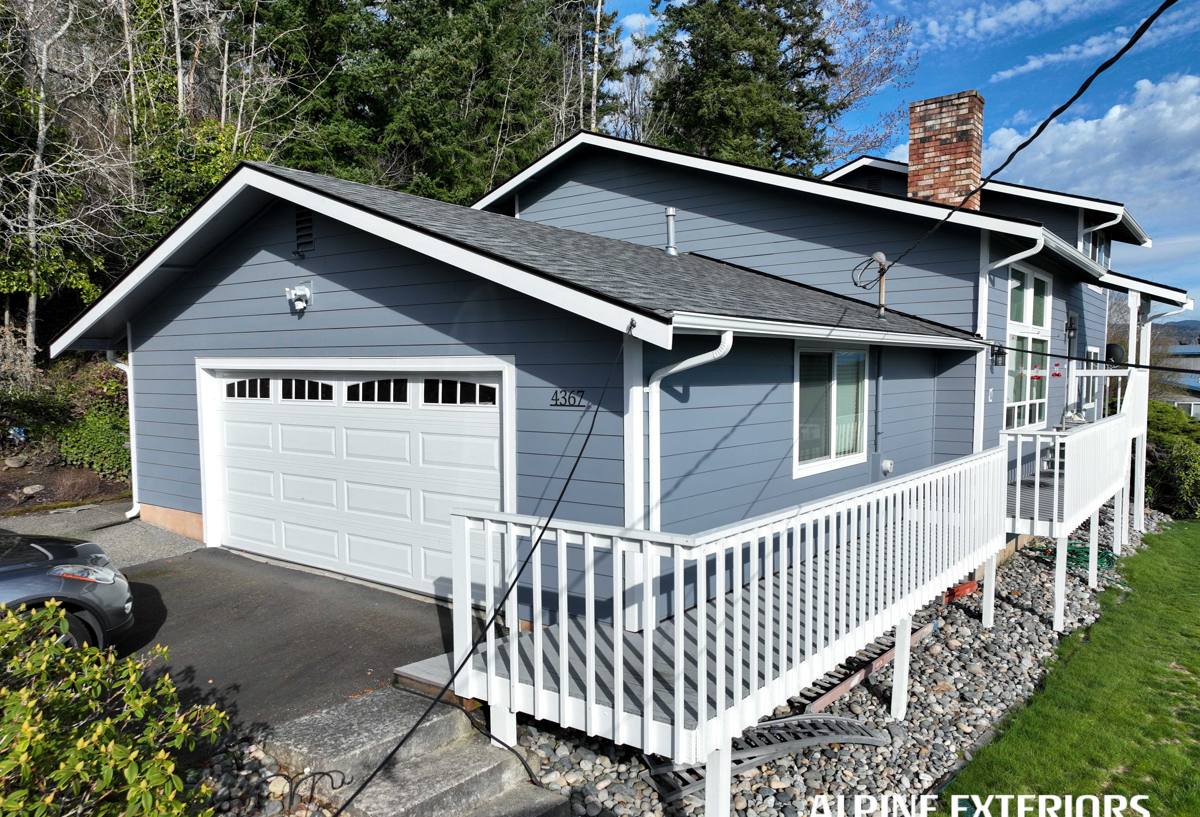
What Sudden Valley's Climate Actually Does to a Shingle Roof
Driving Rain and Wind-Driven Moisture
Whatcom County doesn't just get rain, it gets rain pushed sideways by wind off the water often enough that ordinary shingle installation isn't good enough on its own. Underlayment laps, flashing details, and nail patterns all need to account for wind-driven moisture finding its way up under a shingle edge, not just water running straight down.
Moss and Organic Growth
The long, wet moss season here is the single biggest reason asphalt shingle roofs in this area fail early. Moss holds moisture against the shingle mat, lifts shingle edges as it grows, and works its way into nail penetrations. Left unchecked for a few seasons, it can shorten the useful life of a shingle roof by years — regardless of how good the original installation was.
Salt-Influenced Air
You're not oceanfront, but Sudden Valley does see salt-tinged air on breezier days, and that has a slow, cumulative effect on exposed metal — flashing, fasteners, vents, and gutter hardware. Metal components that aren't rated for a coastal-adjacent environment corrode faster, and corroded flashing is one of the most common causes of a leak that looks like a shingle problem but isn't.
What a Correct Asphalt Shingle Job Looks Like Here
A shingle roof done right for this specific climate isn't just "install the shingles and move on." The details that actually matter locally are mostly in the layers homeowners never see once the job is done:
- Ice-and-water shield or a comparable self-adhered membrane at eaves, valleys, and around every penetration — not just where code minimums require it
- A synthetic underlayment with real tear strength, lapped and fastened for wind-driven rain, not just a light staple pattern
- Corrosion-resistant flashing and fasteners suited to a damp, salt-influenced environment
- Proper nail placement and count per shingle — under-nailing is a leading cause of blow-offs in this kind of wind exposure
- Balanced attic ventilation so moisture from inside the house doesn't condense against the roof deck and feed rot from underneath
- Shingle selection with a real algae-resistant (AR) rating, since ordinary shingles will streak and moss over noticeably faster here
Skip any one of those and the roof may still look fine at first glance — the problems it causes usually show up two, five, or ten years later, which is exactly when they're most expensive to fix.
Choosing the Right Asphalt Shingle for This Neighborhood
Not every asphalt shingle product is a good fit for Sudden Valley's moisture and moss exposure. We steer homeowners toward algae-resistant, laminated architectural shingles with a solid manufacturer warranty over basic three-tab shingles for most homes in this area — the extra mat thickness and AR granules pay for themselves in slower moss colonization and better wind resistance. That said, budget, roof pitch, and the look of the house all factor into the right call, and we'll walk through the real tradeoffs rather than just upselling the most expensive option.
| Shingle Type | Typical Lifespan Here | Moss/Algae Resistance | Wind Performance |
|---|---|---|---|
| Standard 3-tab | 15–20 years | Lower unless AR-rated | Adequate, less margin in gusty spots |
| Architectural / laminated | 25–30 years | Good, especially with AR granules | Strong, rated for higher wind speeds |
| Premium/designer laminate | 30+ years | Very good | Strong, often highest wind rating in the line |
Lifespan figures are general manufacturer ranges, not guarantees — actual life depends heavily on ventilation, maintenance, and how much shade and moss pressure a particular roof faces.
Our Process for a Yew Street Roofing Project
1. On-Site Inspection
We start by physically getting on the roof, not just estimating from photos or satellite images. We check the deck condition, existing ventilation, flashing at every penetration, and how the current roof has handled moss and moisture — that tells us a lot about what the replacement needs to do differently.
2. A Written, Plain-English Estimate
You get a scope of work and a price, not a vague ballpark. If there's a range, we explain what moves the number up or down — deck repair, layer removal, ventilation upgrades, or flashing replacement are the usual variables.
3. Tear-Off and Deck Assessment
We remove the old roofing down to the deck so we can actually see the wood underneath. Soft, delaminated, or water-stained sheathing gets flagged and repaired before anything new goes down — covering over a compromised deck just hides the problem.
4. Underlayment and Flashing First
This is where most of the long-term protection against Sudden Valley's driving rain gets built in. We install the water-resistant membrane, underlayment, and all new flashing before a single shingle goes on.
5. Shingle Installation
Shingles go down to manufacturer nailing specifications, with attention to wind exposure specific to your lot and tree cover.
6. Final Walkthrough
We walk the finished roof and the property with you, confirm gutters and downspouts are clear and functioning, and go over basic maintenance expectations — particularly around moss.
Maintenance That Actually Matters in This Climate
A new roof still needs upkeep here, and the upkeep that matters most in Sudden Valley is different from what a roof in a dry climate needs.
- Have moss growth treated or removed before it spreads — don't wait until it's visibly thick
- Keep gutters and valleys clear of needles and debris so water has a clear path off the roof
- Trim back tree limbs that shade the roof and keep it damp longer after rain
- Schedule a roof check after major windstorms, not just once a year on a fixed calendar
- Watch for granule buildup in gutters, which signals accelerated shingle wear
Common Cost Factors Homeowners Ask About
| Factor | Why It Affects Price |
|---|---|
| Roof pitch and access | Steeper or harder-to-access roofs take longer and require more safety setup |
| Number of layers to remove | Tear-off of multiple old layers adds labor and disposal cost |
| Deck repair needed | Rotten or soft sheathing has to be replaced before new roofing goes on |
| Ventilation upgrades | Adding or correcting intake/exhaust venting protects the new roof's lifespan |
| Shingle tier chosen | Standard vs. architectural vs. premium lines vary in material cost and warranty length |
Why a Locally Experienced Crew Matters for This Job
Roofing knowledge in Whatcom County isn't generic. A crew that regularly works Sudden Valley and the surrounding lake-adjacent neighborhoods has already seen how moss behaves on the shaded slopes common to this area, how wind moves through the tree cover near the water, and where flashing tends to corrode first in this air. That's the kind of pattern recognition that comes from repetition on similar homes, not from a single job or a generic training manual. It shows up in fewer callbacks and a roof that's built for the conditions it will actually face, not just the conditions on a spec sheet.
Signs Your Current Roof Needs Attention
- Visible moss or dark streaking across a significant portion of the roof
- Granules collecting heavily in gutters or at downspout outlets
- Curling, cracked, or missing shingles, especially after a windstorm
- Soft spots or sagging visible from the attic or from ground level
- Water stains on interior ceilings near exterior walls or valleys
- A roof approaching or past 20–25 years old with the original shingles
Any one of these on its own isn't necessarily an emergency, but they're worth having looked at before the next stretch of hard weather rolls through the county.
If you're weighing a repair, a full replacement, or just want an honest read on where your roof stands, we're glad to come take a look. Fill out the form below for a free, no-pressure estimate for your Yew Street area home.