 Sudden Valley Roofing
 Windows Built for Yew Street's Weather
Yew Street sits inside Sudden Valley, and like the rest of this Whatcom County community, homes here take a steady beating from moisture. It's not one dramatic storm that wears out a window — it's months of driving rain pushed sideways by wind off the water, salt-laden air working on hardware and finishes, and a moss season that runs longer here than in drier parts of the state. Windows are one of the few building components that have to manage all three at once: they seal out water, they flex with temperature swings, and their frames sit exposed to whatever grows in shade and damp for half the year.
A window that's a good fit in a dry inland climate isn't automatically a good fit for a Yew Street home. Material choice, flashing detail, and glass package all need to be selected with this specific exposure in mind — not just picked off a showroom floor.
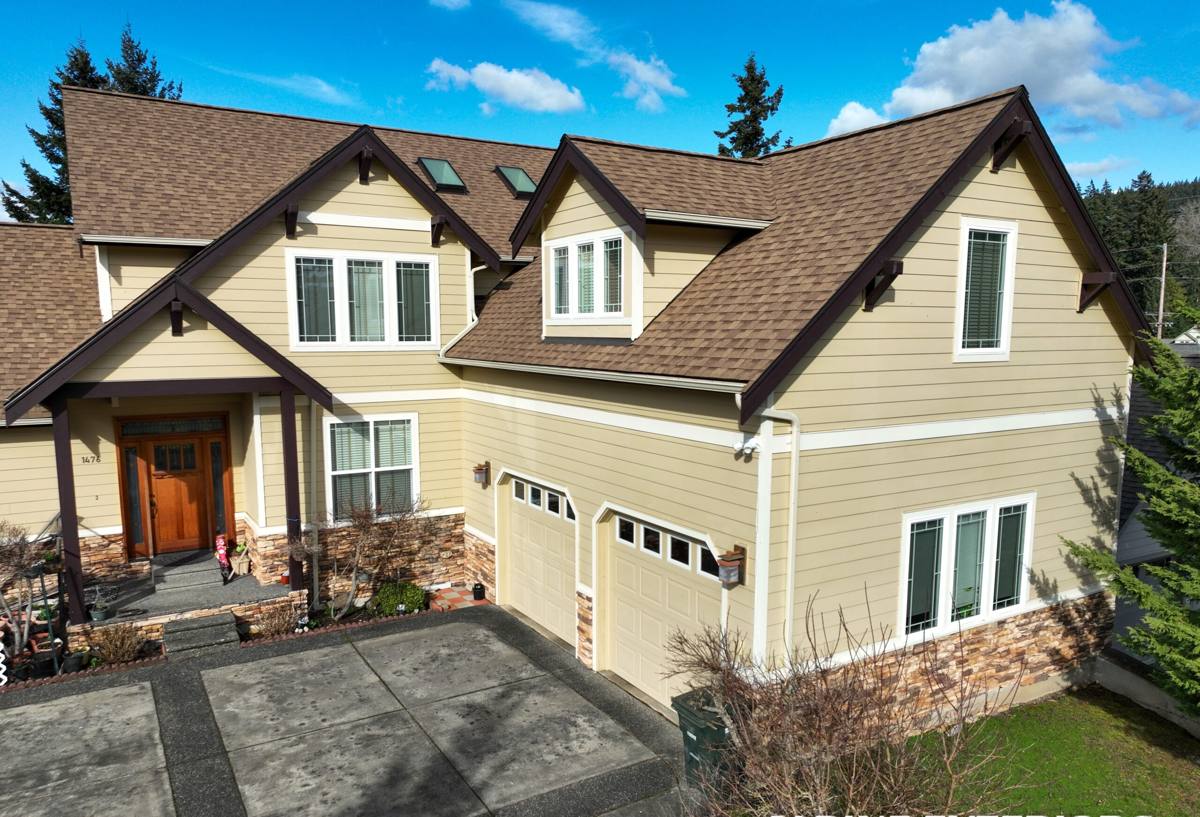
What the Local Climate Does to Windows Over Time
Understanding the failure pattern helps explain why installation quality matters as much as product quality.
Driving Rain and Wind-Driven Water
Wind off Lake Whatcom doesn't let rain fall straight down — it drives it sideways into siding and window openings. Any gap in the flashing or sealant becomes an entry point, and because the rainy season here is long, water gets repeated chances to find a weakness. Most of the window failures we see in this area aren't glass problems; they're water finding its way behind the frame through a flashing detail that was never right to begin with.
Salt Air and Hardware Corrosion
The moist, mineral-laden air common to this part of Whatcom County is hard on exposed metal. Cheap hinges, cranks, and locking hardware corrode faster here than they would in a dry climate, which is why hardware quality and finish matter more on a Yew Street home than the spec sheet might suggest.
A Long Moss and Algae Season
Shaded, north-facing walls and window wells stay damp for extended stretches, which gives moss and algae time to establish on sills, tracks, and trim. Beyond looking bad, that growth holds moisture against wood trim and can work into weep holes and drainage paths if it's never cleaned out.
Choosing Window Materials for a Wet, Mossy Climate
There's no single "best" material for every home — it depends on your home's exposure, your maintenance appetite, and your budget. Here's how the common options actually perform under Sudden Valley conditions.
| Material | Moisture & Rot Resistance | Maintenance Needs | Typical Lifespan | Best Fit |
|---|---|---|---|---|
| Vinyl | Very good — won't rot, low water absorption | Low; occasional track and weep-hole cleaning | 20-30+ years | Budget-conscious replacements, rental or secondary homes |
| Fiberglass | Excellent — dimensionally stable, resists warping | Low | 30-40+ years | Exposed walls that take the brunt of wind-driven rain |
| Wood / Wood-Clad | Fair without diligent upkeep; clad exteriors help | High — finish, caulking, and moss checks needed regularly | 20-30 years with maintenance | Homes prioritizing a traditional interior look |
| Aluminum | Good against moisture, but conducts cold and can condense | Moderate | 20-30 years | Modern styling, larger sightlines |
For most Yew Street homes, we lean toward vinyl or fiberglass on exposed elevations because they shrug off the moisture cycle without demanding constant attention. Wood and wood-clad options still have a place — especially where the look matters — but we're upfront that they come with a real maintenance commitment in this climate, not just an occasional touch-up.
What a Correct Custom Window Installation Actually Involves
The window unit itself is only part of the job. In a climate like this, the installation detail is what determines whether that window is still performing in fifteen years or leaking in three.
Flashing and Sill Pans
Every opening needs a sill pan and properly lapped flashing so that any water that does get past the exterior finish drains back out instead of collecting at the bottom of the frame. This is the single most common shortcut on rushed jobs, and it's the one that causes the most damage later, since it's hidden behind trim once the job is done.
Sealing and Insulation
Low-expansion foam or backer rod and sealant around the frame — not just caulk smeared on the surface — keeps conditioned air in and drafts out, while still leaving the assembly able to drain if water gets behind the cladding.
Trim, Weather Barrier, and Tie-In
The window has to tie into the home's existing weather-resistive barrier correctly, with house wrap or building paper lapped over the top flashing, never under it. Get that sequence backwards and you've built a funnel instead of a barrier.
- Sill pan flashing installed and sloped to drain
- Side and head flashing properly lapped (top piece always overlaps the one below)
- Weather-resistive barrier integrated correctly with the flashing, not just taped over it
- Low-expansion foam or backer rod used at the frame perimeter — no gaps, no over-packing
- Exterior sealant applied at the right joints, with weep paths left clear
- Interior and exterior trim reinstalled cleanly with no exposed fasteners or gaps
- Sash operates smoothly and locks engage fully before we call the job done
Our Process, Start to Finish
- On-site assessment. We look at each opening's exposure, existing flashing condition, and framing before recommending anything — a wall that takes direct wind-driven rain gets treated differently than a sheltered one.
- Product selection. We walk through material, glass package, and hardware options based on that specific opening's exposure and your budget, not a one-size-fits-all recommendation.
- Precise measurement and ordering. Custom windows are built to the exact opening, so accurate measurement up front avoids delays and fit problems later.
- Removal and inspection. Old units come out carefully so we can check the framing and sheathing underneath for hidden rot or past water damage before anything new goes in.
- Installation to flashing and sealing standards. This is where the checklist above gets followed on every opening, not just the visible ones.
- Cleanup and walkthrough. We confirm every sash operates and locks correctly and walk you through basic care before we leave.
Keeping Custom Windows Performing Through Moss Season
Even a well-installed window benefits from a little seasonal attention in this climate.
- Clear debris and moss from tracks and weep holes a couple of times a year, especially on shaded, north-facing windows
- Check exterior caulking annually for cracking or separation, particularly after a hard winter
- Wipe down hardware periodically — corrosion starts small and is far easier to catch early than to replace later
- Trim back vegetation that keeps a window in constant shade, since that's exactly where moss and algae take hold fastest
None of this is a big time commitment, but skipping it is how a well-installed window ends up with an avoidable problem a few years down the road.
Cost Factors to Expect
Custom window pricing varies more than people expect, and material is only one piece of it. Opening size, whether the frame needs to be resized or the opening reinforced, glass package (double vs. triple pane, low-E coatings), hardware grade, and access all factor in. A straightforward replacement in an existing standard-size opening runs toward the lower end of the range; a large custom unit, a widened or structurally altered opening, or specialty glazing pushes it toward the higher end. We give a firm, itemized number after we've actually looked at your openings — not a phone estimate that changes once we're on site.
Why Hire a Crew That Already Works Yew Street
Installation quality is only half the equation — the other half is knowing what a specific street's exposure actually demands. A crew that's already worked on Yew Street knows which elevations take the worst of the wind-driven rain, which lots stay shaded long enough to grow moss on schedule, and what the older housing stock in this part of Sudden Valley tends to have hiding behind the trim once it comes off. That's the difference between a generic install and one that's actually built for where it's going.
If your street falls under a homeowners' association or community design guidelines, we can also work within those rules on trim color, grid pattern, and exterior appearance — it's worth confirming any such requirements before you finalize a product selection, and we're happy to help you sort that out early rather than after windows are ordered.
Get a Free, No-Pressure Estimate
If you're weighing a custom window project for a Yew Street home — whether it's one problem window or a full-house replacement — we're glad to come take a look, walk you through the options that make sense for your home's exposure, and put together a straightforward estimate. No pressure, no obligation. Fill out the form below and we'll get in touch.